Home / Blog / Sound Healing vs Reiki: What's the Difference?
Spirituality · Nervous SystemSound Healing vs Reiki: What's the Difference?
It's the question I'm asked most often, usually while someone is scrolling the booking page trying to work out which button to press. Both sessions involve lying down. Both are deeply restful. So what's actually different?
The short answer
Reiki works through gentle, hands-on touch and stillness. Sound healing works through live vibration — crystal bowls and instruments played around you while you rest.
Reiki is quiet. Sound healing is immersive. Both are aiming at the same place: a nervous system that finally drops out of high gear.
What Reiki is
Reiki is a Japanese practice where you lie down fully clothed and the practitioner places their hands lightly on or just above the body, moving slowly from head to toe. Within the tradition it's understood as supporting the flow of energy through the body.
The practical version: an hour of stillness, warmth and intentional, caring touch. Clients describe heaviness in the limbs, warmth around the hands, and a mind that goes quiet — sometimes for the first time in months.
If you want the longer explanation, I've written a whole piece on what Reiki is and why people love it.
What sound healing is
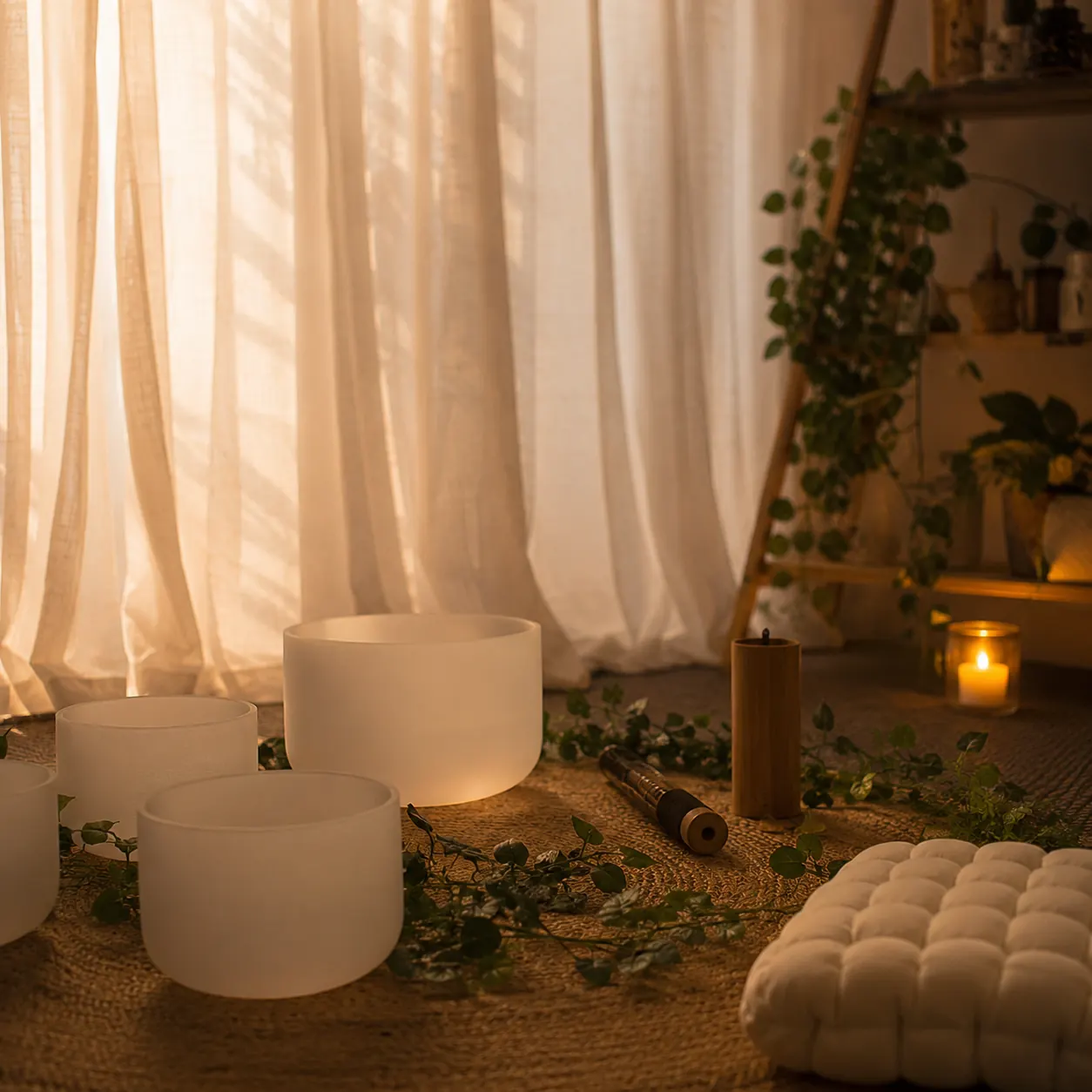
In a sound session you're tucked in on a floor mattress or the treatment bed, wrapped in warm throws, while crystal singing bowls, instruments and frequency are played live around you. Nothing is recorded; the sound moves through the room, and through you.
There's no technique to learn and nothing to concentrate on. That's precisely why it works for people who have decided they're "bad at meditation" — the sound does the slowing down on your behalf.
You don't have to quiet your mind. The sound does that part for you.
The differences that actually matter
- Touch. Reiki is hands-on. Sound healing involves no touch at all — which some people specifically want.
- Volume. Reiki is almost silent. A sound session is full and enveloping; you feel the vibration in your chest and bones as much as you hear it.
- Effort. Both ask nothing of you, but sound tends to override a busy mind more forcefully. Reiki invites the mind to settle; sound gently takes the decision out of your hands.
- What people leave with. After Reiki, most people describe deep calm and a body that's let go. After sound, people more often describe perspective — a sense of having heard themselves think.
- Sharing it. Sound works beautifully for two. Couples sessions let you rest side by side inside the same field of sound; Reiki is a one-to-one experience.
Which should you book first?
Choose Reiki if you're exhausted, wired, holding tension physically, and what you want most is to be still and cared for. The Alignment session — one hour, A$125 — is where most people start.
Choose sound healing if your mind is the loud part. If you lie down and immediately start drafting emails behind your eyelids, sound will get further than silence will.
If you're sensitive to noise, or touch feels like a lot right now, that's worth saying when you book — sessions are adapted either way.
You don't actually have to choose
The two work extremely well together, which is why one of my most-loved sessions weaves them: Alchemy is 90 minutes of Reiki and live sound, led by whatever your energy is doing on the day. Sound opens the space; Reiki settles it.
And if the honest answer is "I don't know, I'm just tired" — start anywhere. Both begin with you lying down in a warm, quiet room with nothing asked of you. That part is the medicine.
Not sure which one? Start with either.
Both begin the same way: you lie down in a private studio inside Ark Sports Club in Burswood and nothing is asked of you for an hour.
Book Your Session